
Has the great app decline made us all harsher daters?
Have we come to accept bad behaviour as inevitable on dating apps – and treat others badly right back because of it?

I can’t tell you how many times over the last three years I’ve been mid-way through a date with someone I have met on a dating app when they tell me, without irony, that they’re over app dating and know they’re never going to meet their partner online. It always elicits the same response: a knowing sinking of the stomach, a deflating of the spirit. The first time it happened I laughed because I assumed the speaker was joking, and was perplexed when it became clear he wasn’t. If he wanted to be in a relationship, but didn’t think he was going to meet his partner on a dating app, what was he still doing on them? And why, more selfishly, was he here with me?
In all honesty, I was surprised the guy held this sentiment at all. I felt the exact opposite. Fuelled partly by a post-lockdown desire to make up for lost time and sew my dating oats, partly by a tendency to immediately shut down any man who comes near me on a night out (still working on that one), I had almost exclusively dated from the apps since my previous relationship had come to an end. It felt inevitable that the only way I would meet a partner was through the apps. Consequently, I had been dating in good faith that every interaction had the potential to become a real relationship. That others might not share this sentiment had never really occurred to me.
That was the summer of 2022. Since then, I’ve heard words to that effect repeated time and time again: by friends and dates, sure, but just as consistently by articles declaring that everyone is “over” online dating. Last year, Ofcom reported that the top 10 dating apps had seen a significant yearly decline (16%) in users, while the Match Group – which owns Hinge and Tinder – admitted in a letter to shareholders that young people seemed to want a “lower pressure, more authentic way to find connections”. In-person events once deemed dated, like singles nights and speed-dating, are now popular amongst my mates, and taken friends have even been racking their brains for single mates to set us singles up with. The popular consensus? Everybody – everybody interested in monogamy, at least – hates dating apps.
Ask people why they’ve had enough of app dating, and the same reasons float to the surface. People don’t want to spend any more time than they have to on their phones, and perceive the apps to have stripped the romance out of dating. There’s also the horror stories about love-bombing, dates disappearing into the ether, and people who claim to be ethically non-monogamous only for it to rapidly become clear that they’re just cheating on their partner. The overwhelming narrative is that dating apps encourage this bad behaviour. People are unwilling to commit because they can’t shake the feeling that someone hotter and better matched could be just a few swipes away; that theory is well documented.
Let’s make one thing clear: nobody is saying that you have to like dating apps. But I can’t help wondering whether our overwhelming negativity about the modern online dating experience is becoming something of a self-fulfilling prophecy. We hear about all these people leaving dating apps deflated and defeated, but the truth is a lot of us still use them because it’s the easiest way – sometimes the only way – we know how to date. This accepted hatred of the apps, I’d argue, is leading to a further dehumanisation of the people on them. In reiterating that the apps are useless because everyone treats each other terribly, I think we’ve come to accept this bad behaviour as part of the experience: in the way we are treated, and the way we treat others back.
The loathing of big tech’s involvement in our personal lives, I get. A million think pieces have already been written about how these apps aren’t really “designed to be deleted”, and have turned dating into just another thing you mindlessly do on your phone so that the companies can keep us using them. If the romantic stories we were raised on from the pre-internet age were all about the meet-cute, apps have fostered in a “meet-practical” that, in theory, has removed the risk from dating. Yet despite this, the prevailing narrative is that dating app romances fizzle out, and will always end with ghosting or cheating or a vague refusal to commit. When all those dates told me they were never going to form a meaningful relationship through the apps, I think this is what they were trying to pre-emptively protect themselves from.
Obviously, there’s nothing wrong with having had it with the apps, and coming off to try and give dating IRL a go. Actually, I think it should be encouraged. The problem, I’ve found, is that there are a lot of people festering away on the apps with an inability to leave that’s turning them into the kind of bad daters they feared being matched with in the first place. Our society romanticises the idea of meeting the old-fashioned way, but is unprepared for the fact that dating more quote-unquote organically can also be time-intensive, nerve-inducing and simply uncertain. So people continue on Hinge, and resentment stews: first towards the algorithm they feel forced to use, then the other people using it too.
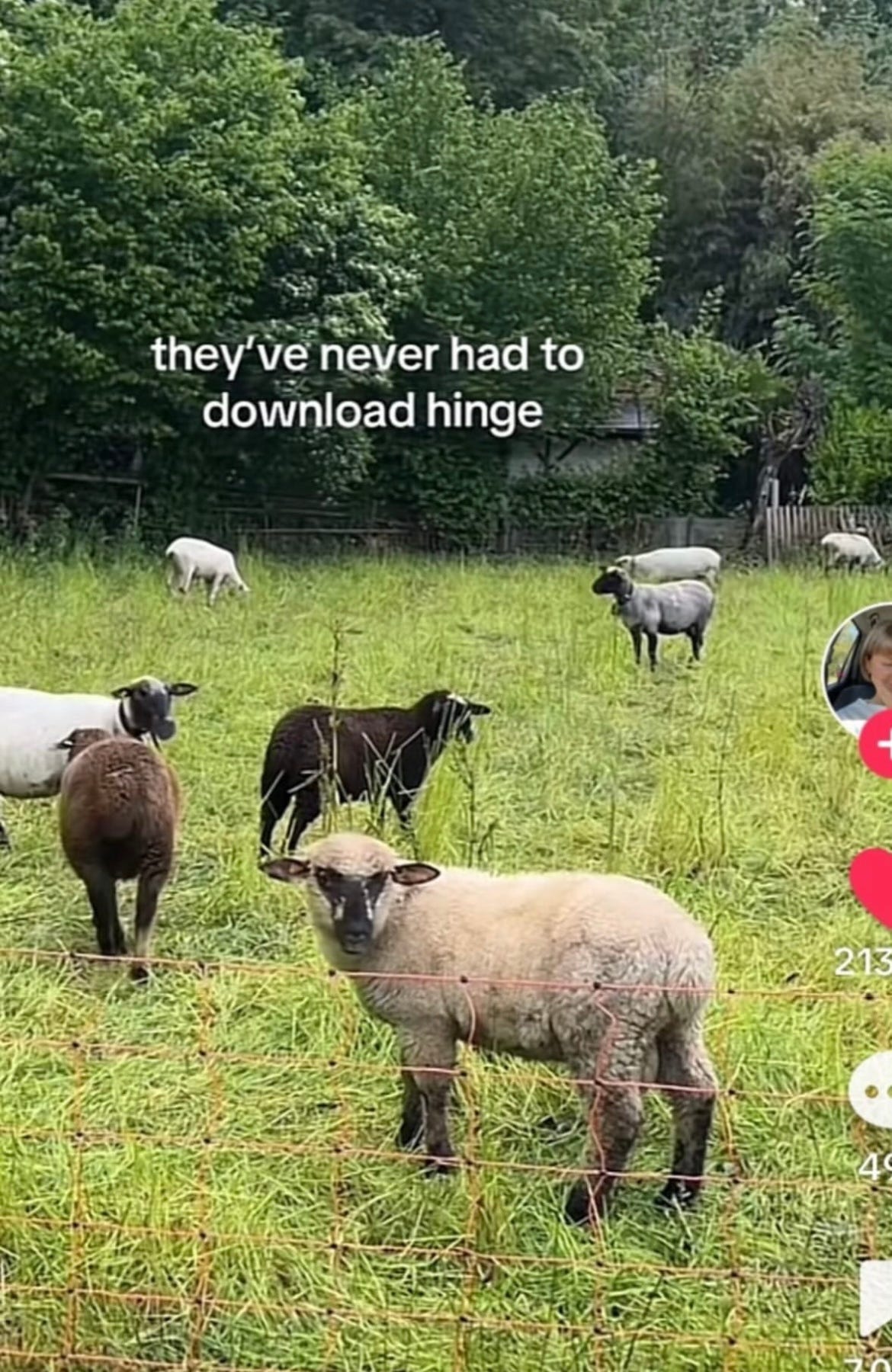
It’s no secret that our individualistic society makes it harder to foster connections in person, but there have always been risks to consider when it comes to dating out there in the real world. One guy I dated told me he didn’t try to pull on nights out unless it was super clear that the girl was interested, because he assumed the focus of the evening for women – as it was for him – was spending time with their friends. And what if you do get set up by a pal, but the relationship doesn’t work out and the two of you are forced to awkwardly oscillate around each other at parties forever? These outcomes have always been a possibility, but we tend to gloss over them. When people say that they “want to meet someone off dating apps”, it’s fair to assume that the sentence would continue: “Because that will be easy, unlike this.”
Over the last few years, I’ve found that dating apps are populated with people of all genders and sexualities who would do anything not to be there, but aren’t prepared for the alternative. On paper, I don’t think it’s an inherently bad thing, until this hatred of the apps leads to the users dehumanising the people on it. From personal experience, there are many people in my recent dating past who have resented that we met online, and turned up to our first drinks convinced that it wasn’t going to work out precisely because of that reason. With the outcome deemed to be predetermined, I think bad behaviour was seen as excusable because the relationship was never going anywhere anyway.
Of course, the stereotypes of poor dating etiquette – ghosting, bread-crumbing, [insert name of latest TikTok dating trend here] – are well documented. It is undeniably easier to get away with mistreating people you date when you don’t share the same world or mutual friends to hold you accountable. Bad behaviour is an easy cycle to get into, especially when we reiterate that everyone does it. I’ve ghosted too; rarely after we’ve actually met, and definitely less frequently than I’ve been on the receiving end of it, but I have. And for what it’s worth, I’ve experienced similar behaviour from the few people I’ve dated after meeting in-person, too. Are these app-based attitudes leaking into the real world, or is it simply that meeting people organically was never as easy as we romanticised it to be?
The other aspect of this phenomenon is harder to quantify. It tends to come from the people who are quieter about their feelings about dating apps, rather than those who make their feelings known with the sadly popular Hinge prompt: “Together we could: lie about how we met.” All I know is: I have dated many men from dating apps and felt like they spent the whole time metaphorically watching over my shoulder for something, quote-unquote, real. This slippery feeling, based on the assumption that any relationship sparked up in person will always outweigh an online connection, has left me with a pervasive anxiety that the people I’m dating will drop me in a heartbeat – and it ain’t fun.
I think part of the reason this unashamed negativity towards the apps rubs me the wrong way is because, while nobody has asked me to, at some point I unofficially pledged to be a rare positive voice about the app experience. There is a well-known bodily response you’re expected to give when someone asks how dating is going: an eye roll and groan from you, a slow, knowing nod and grimace from them. I try to resist repeating it. I might not have found a long-term partner, but I look back on my time on the scene pretty positively; I’ve met interesting people and friends through the apps, and can count the number of bad dates on one hand. This deliberately optimistic perspective has partly been for my own motivation, but I also hated the thought of people hearing me complain about the apps and validating that they should stay in bad relationships because they could “never do app dating”.
Crucial to my net-positive attitude towards online dating, I think, is that I’ve never blamed the apps as the reason my relationships in recent years haven’t stuck. Others, I can tell, have been more cynical. When I’d recount the you-have-to-laugh-or-you’ll-cry story of the boyfriend of summer of 2023 – he who broke up with me one month after making it official – they’d respond with the appropriate “oof”s and “no way”s. But when I’d add the context that we’d met on hook-up app Feeld, I’d see a shift. One response would flash in their eye, and they’d sometimes put it into actual words too: girl, what did you expect?
What did I expect? Hard one to answer, that. For much of my time on the apps, I wanted to make up for the lost lockdown years. At other points, I thought I was ready for a relationship, but was willing to park that idea for the first hot-but-not-committal man who gave me any attention. The relationship with the Feeld boyfriend was short-lived and ended messily, but we were serious about each other pretty much from the jump despite the app we met on. The first few months we dated were the kind of easy that makes you remember past relationships and go, “Ohhhh, it should always be like this.” Even now, I don’t think it was the app that contributed to the relationship’s rough and rapid demise. We’d swiftly integrated into each other’s lives; it would have ended just as horribly if we’d met IRL. Maybe even worse.
It’s hard writing this without sounding like an app evangelist, or that I’m about to reveal that this post is coming to you in partnership with Bumble at any moment. Obviously, I do think there’s truth in the well-trodden argument that apps facilitate bad behaviour. Simultaneously, I worry that when we only reiterate this about dating apps, we make it true. It’s rare to hear people talk about the couples they know who did find their partners on dating apps – once they’re together, how they met is unimportant. No, we tell the horror stories and these tales all stack up, forming an inescapable narrative that dating apps are bad news for everyone.
If “ideally, I’d prefer to meet my partner in real life” is the positive version, then it’s “everyone treats each other on apps horribly, I’ll never meet a partner on there” that immediately sets off my alarm bells. It’s that rhetoric that can lead to the people you’ve met online never being seen as whole, actualised people, as opposed to ones who can be tossed aside at any moment for a real-world connection. Even the way I’ve written about dating online versus in “real life” betrays this attitude. The people we meet on dating apps are real just because they’ve been introduced to us online.
It was while ruminating on this subject that I came to the realisation that, despite my supposed optimism about dating apps, part of me too had believed that it wasn’t going to happen for me. Virtually none of my closest friends in relationships met their partners online. I could tell myself I was positive all I wanted, but as long as I didn’t have those examples, it was hard to imagine. I was only dating online, but while my dates were assuming their app dates would go nowhere, I was bringing my own preconception that the people I was dating were going to treat me worse because we met online. So in the end, I followed my own advice. For the first time I didn’t feel positive about dating apps, and knew I wasn’t going to be bringing positive energy to the dates I would, inevitably, still be going on. I’d been on the other side and hated it – it wasn’t fair.
When I initially deleted my account, my break from the apps was just for the summer, but the desire to return soon faded. And you know what? After years of saying I only knew how to meet people through apps, I did still date: friends of friends, a guy who slid into my Instagram DMs which we joked was now the “old-fashioned way” of meeting. It was good to remind myself that I can date outside of the apps, but I think I’d assumed that these relationships had legs because we hadn’t met on the apps, when the outcome turned out to be the same had we met through a swipe. What I have taken away from the break is that I don’t feel so reliant on apps. If and when I return, I’m hopeful I won’t be so resentful towards the people who don’t respect the process, because I now know it’s not my only option.
As to the underlying cause of bad behaviour on dating apps? I think the messy tangled strings have become so knotty that it’s hard to tell which problem is at the centre. I do think that when we repeat that the apps make us all behave worse to each other, we come to accept and amplify unpleasant behaviour that, yes, would have been there in the first place. But let’s be honest: people have been cheating and lying and disappearing on each other long before the internet, and probably always will.
I’ll say it again – I’m not going to tell anyone they have to love dating apps. But if you really hate them and are still using them, I do think it’s worth evaluating whether that dislike is leading to you accepting, or even performing back, bad behaviour to the people you are dating. A break can do you the world of good. After eight months off the apps, I feel positive about dating again – not pretend positive for myself and others, but truly optimistic. Imagine!
I have found Feeld to be legitimately the best dating app for everything; your side-eyeing friends are frigid fools. Well done.